
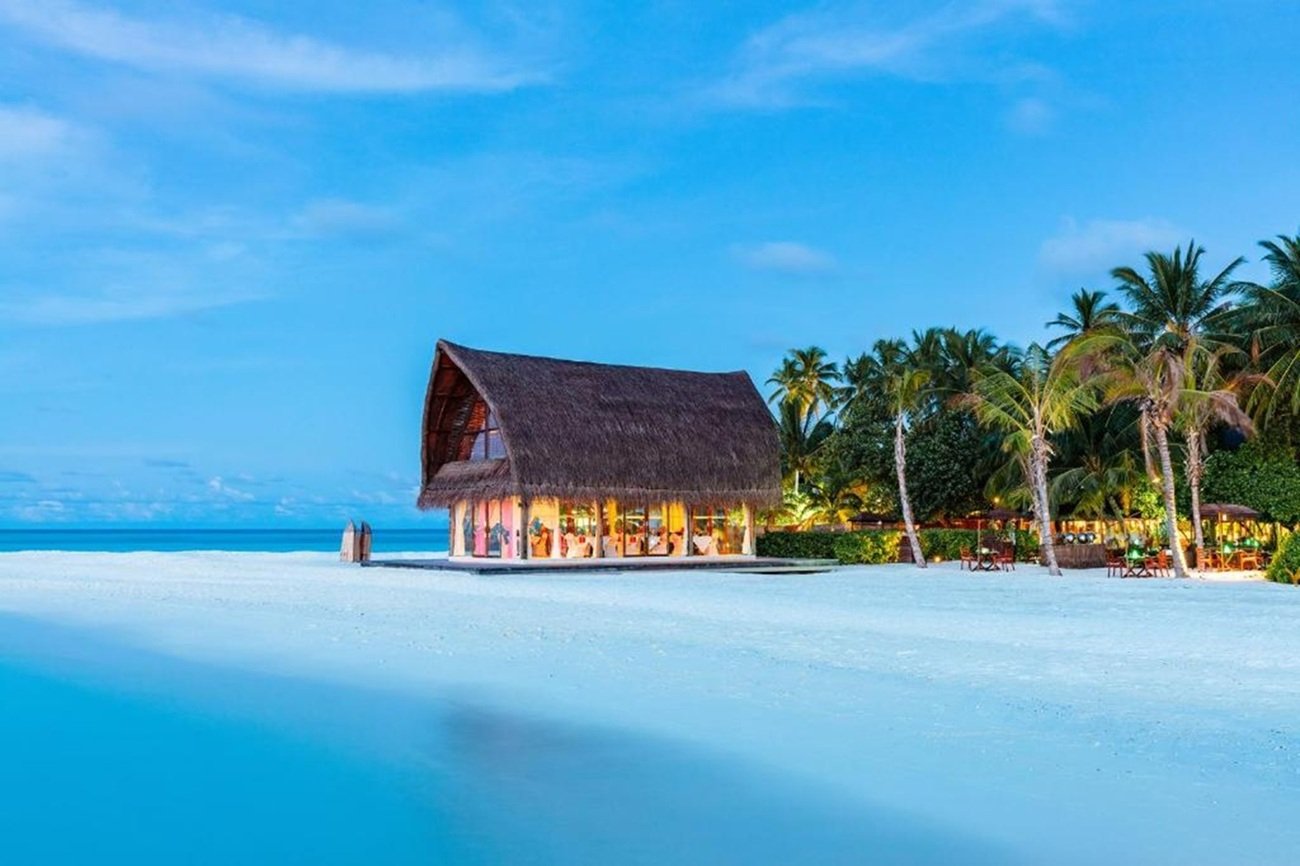
Best Time to Visit Maldives: Weather, Seasons & Travel Guide 2027
The ultimate month-by-month guide to Maldives weather, seasons, prices, sunshine, snorkeling, diving and choosing the perfect time for your island escape.
☀️ Dry Season • 🌧️ Wet Season • 🌊 Calm Seas • 🐠 Marine Life • 💰 Best Value • ❤️ Honeymoons
Best Time to Visit Maldives at a Glance
If you’re wondering when to visit the Maldives, the short answer is:
January to April is generally the best period for the classic Maldives holiday — especially if your priorities are sunshine, calmer seas, blue skies and the highest chance of enjoying picture-perfect beach and lagoon conditions.
But that doesn’t mean you should automatically book a trip during these months.
The Maldives is a year-round destination, and each season offers something different.
Travel during the wetter months and you may find lower resort rates, fewer crowds, lush tropical scenery and excellent opportunities for marine-life encounters. For surfers, certain parts of the year can actually be more attractive than the traditional peak season.
And even during the wet season, rain does not necessarily mean a day lost to bad weather. Tropical showers are often short-lived, with sunshine returning between periods of rain.
So the best time to visit the Maldives depends on what you want from your trip.
If you want the safest bet for a classic luxury beach holiday, choose the dry-season months.
If you’re looking for better value, don’t automatically rule out the rainy season.
If you’re visiting primarily for snorkeling, diving, surfing, manta rays or whale sharks, the answer becomes more complicated — and that’s where choosing the right month and atoll can make a significant difference.
When Is the Best Time to Visit Maldives?
🏆 Best Overall: January–April
For most first-time visitors, January through April offers the best combination of sunshine, relatively dry weather and calmer seas.
These months are particularly attractive for:
- First-time Maldives visitors
- Honeymooners
- Luxury travelers
- Beach holidays
- Overwater villa stays
- Swimming and watersports
- Sunset cruises
- Couples celebrating anniversaries
- Travelers who want the lowest practical risk of prolonged rain
The period around January, February and March is especially attractive for travelers prioritizing sunshine. The Maldives Meteorological Service reports approximately 10–11 hours of sunshine per day on average during January, February and March, compared with roughly 7–9 hours during other months.
💰 Best for Value: May–November
If price matters as much as weather, consider traveling during the southwest monsoon.
This is traditionally the wetter period, but it can also bring lower rates, promotional offers and fewer peak-season crowds.
For travelers willing to accept a greater chance of tropical showers, the potential savings can make the experience considerably better value.
This is particularly worth considering if you’re staying at a high-end resort where peak-season rates can be dramatically higher.
🌴 Best Shoulder-Season Strategy: April & November
April and November are interesting months for travelers who want to balance weather and value.
They sit around the seasonal transitions and can offer a mixture of sunny periods, tropical showers and changing sea conditions.
Rather than thinking of these months as simply “good” or “bad,” consider them as opportunity months.
Resort pricing can be more attractive than the busiest holiday periods, while weather can still deliver plenty of beautiful Maldives days.
Understanding Maldives Seasons
Unlike destinations with four clearly defined seasons, the Maldives essentially revolves around two monsoon patterns.
☀️ Northeast Monsoon — The Drier Season
Generally: January–March
The northeast monsoon is the Maldives’ traditionally drier season.
During this period, travelers can generally expect:
✓ More sunshine
✓ Lower rainfall
✓ Calmer seas
✓ Excellent beach conditions
✓ Strong visibility for many water activities
✓ Ideal conditions for swimming and boating
December and April are considered transition periods by the Maldives Meteorological Service, so weather patterns don’t change overnight on a specific calendar date.
This is one reason why weather statistics should be used as a guide rather than a guarantee.
Southwest Monsoon — The Wetter Season
Generally: Mid-May–November
The southwest monsoon brings increased rainfall and stronger winds compared with the drier months.
However, “rainy season” can be misleading.
The Maldives remains warm throughout the year, and rainfall frequently occurs as tropical showers rather than continuous all-day rain.
You might experience:
Morning sunshine → afternoon shower → spectacular sunset
or:
Several hours of rain → clearing skies → beautiful evening
There can also be periods of several consecutive sunny days during the wet season.
This unpredictability is precisely why travelers shouldn’t dismiss May through November altogether.
Maldives Weather: What Can You Expect?
The Maldives has a warm, tropical climate throughout the year.
Average temperatures generally remain around 25°C to 32°C, with relatively modest seasonal temperature changes.
In other words, you’re unlikely to experience the dramatic temperature swings associated with destinations that have traditional winter and summer seasons.
Instead, the biggest difference between seasons is generally rainfall, wind, humidity, sunshine and sea conditions.
That distinction is important when planning your holiday.
You aren’t choosing between “cold season” and “hot season.”
You’re choosing between periods with different probabilities of sunshine, rain, wind and sea conditions.
Maldives Weather by Season
| Season | Approx. Period | Weather | Sea Conditions | Resort Prices | Best For |
| ☀️ Dry Season | January–March | Sunny & relatively dry | Generally calmer | $$$$ | First-time visitors, honeymooners |
| 🌤️ Transition | April | Hot, mixed conditions | Generally good | $$$ | Couples, beach holidays |
| 🌧️ Wet Season Begins | Mid-May–June | More showers & wind | Can be rougher | $$–$$$ | Value travelers, surfers |
| 🌧️ Southwest Monsoon | July–September | Tropical rain & sunshine | More variable | $$–$$$ | Budget travelers, surfers |
| 🌦️ Late Wet Season | October–November | Mixed weather | Variable | $$–$$$ | Value & marine-life trips |
| 🌤️ Transition | December | Improving conditions | Increasingly calmer | $$$–$$$$ | Christmas & New Year travelers |
Important: These are broad seasonal patterns, not guarantees. Weather varies between years and between the northern, central and southern atolls.
Is the Maldives Worth Visiting During Rainy Season?
Absolutely.
One of the biggest mistakes travelers make is assuming that “rainy season” means constant rain.
It doesn’t.
The Maldives receives sunshine throughout the year because of its equatorial location, and even during the southwest monsoon, rainfall often arrives in tropical showers rather than uninterrupted rain.
The Maldives Meteorological Service notes that rainfall is normally in showery form and does not last long, with sunny periods in between.
That means a rainy-season holiday could still include plenty of:
🏝️ Beach time
🤿 Snorkeling
🐠 Diving
🌅 Sunsets
🚤 Boat trips
🏄 Surfing
💆 Spa treatments
🍽️ Long outdoor lunches
🌴 Villa relaxation
And there is another major advantage:
You may pay substantially less for the same resort experience.
Peak Season vs Low Season in the Maldives
The best time to visit isn’t necessarily the same thing as the best time to book.
This distinction is particularly important in the Maldives because resort prices can vary significantly according to demand.
Peak Season
The busiest and generally most expensive period is concentrated around the drier months, particularly:
December → January → February → March → April
Christmas and New Year can be especially expensive, with some luxury resorts commanding significant festive-season premiums.
If you’re planning a Christmas, New Year or February honeymoon, booking early is strongly recommended.
Low Season
The southwest monsoon generally brings greater opportunities for lower rates.
For travelers with flexible dates, this can create an interesting trade-off:
Spend more for weather certainty
or
Spend less and accept a higher chance of rain.
For a luxury Maldives holiday, that decision can be worth thousands of dollars.
A traveler spending $1,000+ per night may find that moving the trip by several weeks can make a significant difference to the total cost of a five- or seven-night stay.
What Is the Best Month to Visit Maldives?
There isn’t one perfect month for everyone.
Instead, think of the year like this:
🥇 January
Best for: Sunshine, honeymooners, first-time visitors
One of the strongest choices for travelers who want classic dry-season Maldives weather.
🥇 February
Best for: Sunshine, beaches, couples and luxury holidays
February is one of the most attractive months for a traditional Maldives escape, with excellent sunshine and generally favorable conditions.
🥇 March
Best for: Beach holidays, diving and warm weather
March remains part of the drier period and is also among the warmest months of the year.
⭐ April
Best for: Shoulder-season travelers
A fascinating month because conditions can begin changing as the southwest monsoon approaches.
💰 May
Best for: Value seekers and surfers
The southwest monsoon begins influencing conditions, but sunny periods remain possible.
💰 June
Best for: Budget-conscious travelers and surfers
Rainfall and winds become more influential, but resort prices can become more attractive.
💰 July
Best for: Summer holidays, surfers and value travelers
A good option for travelers who don’t require guaranteed sunshine every day.
💰 August
Best for: Value travelers and marine enthusiasts
Expect more variable conditions, but potentially excellent resort deals.
💰 September
Best for: Budget travelers
One of the wetter periods, but also one of the months worth considering if maximizing value is the priority.
🌴 October
Best for: Value + marine-life experiences
Weather remains variable, but there can be plenty of beautiful days between showers.
🌤️ November
Best for: Shoulder-season travelers
A transition toward the drier period, with improving conditions possible.
🎄 December
Best for: Festive holidays and luxury escapes
December can be spectacular, but Christmas and New Year demand can make this one of the most expensive times to visit.
Our Simple Recommendation
If you’re still unsure when to travel, use this rule:
☀️ Want the best chance of perfect beach weather?
Visit January–March.
❤️ Planning a honeymoon?
January–April is the safest overall choice for couples prioritizing sunshine and calm conditions.
💰 Want to save money?
Consider May–November.
🏄 Want to surf?
Consider the southwest monsoon months, when surf conditions can be more favorable.
🤿 Visiting primarily for diving or marine life?
Don’t choose based on weather alone.
The best month can depend on the atoll, species and type of marine experience you’re targeting.
We’ll explore that in detail later in this guide.
The Biggest Maldives Weather Myth
“If I visit during the rainy season, I’ll be stuck inside my villa.”
Not necessarily.
This is one of the most common misconceptions about Maldives travel.
The southwest monsoon increases the likelihood of rain, but it doesn’t mean that every day is a washout.
The Maldives remains warm and receives sunshine throughout the year.
In fact, some travelers discover that a tropical rainstorm can become one of the most memorable moments of their trip.
Imagine sitting beneath the covered deck of your overwater villa as warm rain falls onto the lagoon, watching the clouds roll across the horizon.
Twenty minutes later, the sky clears.
The ocean becomes glassy.
And the sunset begins.
That’s the Maldives too.
Before You Choose Your Travel Dates
Weather should be only one part of your decision.
Before booking, consider:
1. Your budget
Peak-season resort rates can be dramatically higher.
2. Your reason for visiting
A honeymoon, diving holiday, family vacation and surfing trip may have completely different ideal travel periods.
3. Your resort
Some resorts are better suited to rainy-season stays because they offer excellent spas, indoor facilities, multiple restaurants and extensive activities.
4. Your transfer
Seaplane and domestic-flight transfers can be more weather-sensitive than a short speedboat journey.
5. Your marine-life goals
If seeing manta rays, whale sharks or particular species is a priority, seasonal marine conditions may matter more than simply chasing sunshine.
6. Your tolerance for rain
If one rainy afternoon would bother you enormously, pay more for the drier season.
If you’re happy enjoying the resort between tropical showers, the low season can offer exceptional value.
Editor’s Verdict
There is no single “perfect” time to visit the Maldives.
There is, however, a perfect time for you.
For the classic postcard Maldives experience, January through March is our preferred window.
For the best combination of sunshine and flexibility, January through April is difficult to beat.
For travelers focused on value, May through November deserves serious consideration.
And for specialized experiences such as surfing, manta rays, whale sharks and diving, the answer becomes much more specific.
That’s why we don’t recommend choosing your Maldives dates based on a simple weather calendar.
Choose your travel dates around the experience you want.
Continue Exploring the Maldives
Planning your trip? These guides can help you choose the right island and experience:
Explore our carefully selected resorts for luxury, romance, families, snorkeling and exceptional island experiences.
👨👩👧👦 Best Family Resorts Maldives
Looking for a resort the whole family will love? Discover our top family-friendly island escapes.
❤️ Best Adults-Only Maldives Resorts
Planning a romantic escape? Explore the Maldives’ best adults-only resorts for couples and honeymooners.
💰 Best Budget Maldives Resorts
Want the Maldives experience without the ultra-luxury price tag? Discover our best-value island resorts.
Maldives Weather by Month: January to December
If you’re trying to decide exactly when to visit the Maldives, looking at the seasons alone isn’t enough.
A trip in January can feel very different from one in April. A July holiday can deliver several spectacular sunny days despite being part of the southwest monsoon. And November can offer a very different experience depending on which atoll you choose.
The Maldives is a tropical destination with warm temperatures throughout the year. Average temperatures generally remain between 25°C and 32°C, while the biggest seasonal differences are rainfall, sunshine, wind and sea conditions rather than temperature.
That’s why we’ve broken down every month below.
Maldives Weather Calendar at a Glance
| Month | Weather | Rain Risk | Sunshine | Sea Conditions | Overall Rating |
| January | ☀️ Mostly dry | Low | ⭐⭐⭐⭐⭐ | Generally calm | ⭐⭐⭐⭐⭐ |
| February | ☀️ Mostly dry | Low | ⭐⭐⭐⭐⭐ | Generally calm | ⭐⭐⭐⭐⭐ |
| March | ☀️ Hot & dry | Low–Moderate | ⭐⭐⭐⭐⭐ | Generally calm | ⭐⭐⭐⭐⭐ |
| April | 🌤️ Hot & transitional | Moderate | ⭐⭐⭐⭐ | Generally good | ⭐⭐⭐⭐½ |
| May | 🌦️ Monsoon transition | Moderate–High | ⭐⭐⭐ | More variable | ⭐⭐⭐½ |
| June | 🌧️ Wet season | High | ⭐⭐⭐ | Variable | ⭐⭐⭐ |
| July | 🌦️ Wet season | High | ⭐⭐⭐ | Variable | ⭐⭐⭐ |
| August | 🌦️ Wet season | High | ⭐⭐⭐ | Variable | ⭐⭐⭐ |
| September | 🌧️ Wetter period | High | ⭐⭐½ | Variable | ⭐⭐½ |
| October | 🌦️ Wet season | High | ⭐⭐⭐ | Variable | ⭐⭐⭐ |
| November | 🌤️ Transition | Moderate | ⭐⭐⭐½ | Improving | ⭐⭐⭐½ |
| December | ☀️ Transition to dry | Moderate | ⭐⭐⭐⭐ | Improving | ⭐⭐⭐⭐½ |
Important: These ratings are editorial guidance, not weather guarantees. Maldives weather varies from year to year and between northern, central and southern atolls. The Maldives Meteorological Service specifically notes that rainfall varies geographically, with southern atolls generally receiving more annual rainfall than northern atolls.
January in the Maldives
☀️ January — One of the Best Months for a Maldives Holiday
Best for: Honeymoons • Beach holidays • First-time visitors • Luxury resorts • Sunshine
January is one of the strongest choices if your priority is the classic Maldives experience.
The month falls within the northeast monsoon’s drier period, and the Maldives Meteorological Service records January, February and March as the months with the highest average sunshine duration — around 10–11 hours per day.
Expect warm temperatures, plenty of sunshine and generally favorable conditions for enjoying the beach and lagoon.
Why visit in January?
- Excellent chance of sunny weather
- Generally lower rainfall
- Warm tropical temperatures
- Good conditions for swimming and boating
- Excellent honeymoon month
- Ideal for a first Maldives trip
The downside
January is popular.
That means resort demand can be high, particularly around the New Year holiday period.
If you’re planning to travel in January, don’t wait until the last minute to book a popular luxury resort.
Our verdict
★★★★★ — Excellent
If someone asked us to recommend one month for a first Maldives holiday without knowing anything else about their plans, January would be near the top of our list.
February in the Maldives
☀️ February — Our Pick for Classic Maldives Weather
Best for: Honeymoons • Couples • Luxury travelers • Beaches • Photography
February is arguably one of the easiest months to recommend.
It sits comfortably within the northeast monsoon’s drier period and benefits from the Maldives’ highest sunshine period.
For travelers imagining the Maldives as:
bright blue lagoon + white sand + warm sunshine + calm tropical water
February comes very close to that postcard ideal.
Why visit in February?
- Excellent sunshine
- Relatively low rainfall
- Warm temperatures
- Generally favorable sea conditions
- Superb for beach-focused holidays
- Excellent honeymoon conditions
Who should choose February?
If your trip is a once-in-a-lifetime honeymoon and you’re willing to pay a premium for a better chance of classic dry-season conditions, February is one of our favorite choices.
Our verdict
★★★★★ — Exceptional
February is one of the best months to visit Maldives.
March in the Maldives
☀️ March — Hot, Sunny & Excellent for Water Activities
Best for: Beach holidays • Diving • Snorkeling • Couples • Luxury escapes
March continues the northeast monsoon’s drier period and remains one of the sunniest times of year.
It is also among the warmer months, with the Maldives Meteorological Service identifying March and April as part of the country’s warmest period, extending toward the arrival of the southwest monsoon in mid-May.
For travelers who love spending most of their holiday in the water, March can be particularly appealing.
Why visit in March?
- Long sunny days
- Warm ocean temperatures
- Generally favorable beach conditions
- Excellent for swimming
- Great for snorkeling and diving
- Excellent honeymoon month
The downside
March can be hot.
If you’re sensitive to heat, schedule outdoor activities around the morning and late afternoon and use your resort’s shaded areas during the strongest midday sun.
Our verdict
★★★★★ — Excellent
March is one of the safest choices for travelers who want sunshine without moving into the Christmas/New Year peak.
April in the Maldives
🌤️ April — Hot, Beautiful & a Fascinating Shoulder Month
Best for: Couples • Beach holidays • Divers • Travelers seeking shoulder-season opportunities
April is particularly interesting because it sits between the Maldives’ two principal monsoon periods.
The Maldives Meteorological Service classifies April as a monsoon transition month.
That means you shouldn’t treat April as simply “dry season.”
Instead, think of it as a month where conditions can begin changing.
Why visit in April?
- Still plenty of sunshine
- Very warm temperatures
- Excellent beach conditions are possible
- Attractive shoulder-season opportunity
- Good month for water activities
The downside
Weather becomes less predictable compared with February or March.
Rainfall can begin increasing as the southwest monsoon approaches.
Our verdict
★★★★½ — Excellent
April is a smart choice for travelers who want dry-season-style conditions but don’t necessarily need the absolute peak-weather months.
May in the Maldives
🌦️ May — The Start of the Southwest Monsoon
Best for: Value travelers • Surfers • Flexible travelers • Resort deals
May is where the Maldives weather story starts to change.
The southwest monsoon normally begins around mid-May, according to the Maldives Meteorological Service.
This doesn’t mean May 15 suddenly brings rain.
Monsoon seasons are patterns, not switches.
You can still experience beautiful sunny days, but rainfall and wind generally become more influential.
Why visit in May?
- Potentially better resort rates
- Fewer peak-season crowds
- Warm tropical temperatures
- Plenty of opportunities for sunshine
- Attractive for travelers with flexible schedules
The downside
Rainfall becomes more likely and sea conditions can become more variable.
Our verdict
★★★½ — Good for flexible travelers
May is not our first recommendation for a honeymoon where perfect weather is the absolute priority.
But for a traveler who values resort value and doesn’t mind tropical showers, May can be very interesting.
June in the Maldives
🌧️ June — Wet Season, But Still Worth Considering
Best for: Budget-conscious travelers • Surfers • Flexible summer travelers
June sits firmly within the southwest monsoon.
This means travelers should expect a higher chance of rainfall and more variable winds and seas.
But here’s the important distinction:
Wet season does not mean continuous rain.
The Maldives Meteorological Service says rainfall is normally in showery form, with sunny periods between showers.
Why visit in June?
- Potentially lower resort rates
- Less peak-season pressure
- Tropical landscapes remain lush
- Good option for flexible travelers
- Surfing conditions can become attractive
What should you expect?
You could have:
☀️ Sunny morning
🌦️ Tropical shower
☀️ Afternoon sunshine
🌅 Beautiful sunset
Or you could experience a much wetter day.
That’s the nature of the southwest monsoon.
Our verdict
★★★ — Good for value
If your main goal is to spend as little as possible while still experiencing a luxury Maldives resort, June is worth investigating.
July in the Maldives
🌦️ July — The Maldives in Summer
Best for: Summer holidays • Surfers • Value travelers • Flexible couples
July is firmly within the southwest monsoon.
For travelers who have school holidays or annual leave during July, however, the Maldives can still be an appealing option.
The destination remains warm, tropical and operational throughout the year.
And Visit Maldives has increasingly promoted the Maldives as a year-round destination, including its 2026 “SeaSational Summer” campaign designed specifically to encourage summer travel.
Why visit in July?
- Summer vacation opportunity
- Potentially attractive resort offers
- Warm water
- Surfing opportunities
- Fewer peak-season crowds
The downside
Rain and wind are more likely than during January–March.
Sea conditions can also be less predictable.
Our verdict
★★★ — Good if value matters
July isn’t the month we’d choose for maximum weather certainty.
But if July is when you can travel, don’t automatically cross the Maldives off your list.
August in the Maldives
🌦️ August — Tropical Showers & Potential Resort Value
Best for: Value travelers • Summer escapes • Surfers • Marine-life enthusiasts
August continues the southwest monsoon.
You should expect more variable weather than during February or March, but the Maldives remains warm and inviting.
For the right traveler, August can provide a compelling balance between luxury resort availability and price.
Why visit in August?
- Often more attractive than peak-season pricing
- Warm tropical temperatures
- Fewer crowds at some resorts
- Surfing opportunities
- Excellent resort facilities for rainy-day relaxation
An important advantage for luxury travelers
Rainy-season travel can actually make you appreciate a great resort more.
A resort with:
- an exceptional spa
- multiple restaurants
- indoor lounges
- cooking classes
- yoga
- fitness facilities
- private pools
- entertainment
- excellent villa service
can turn a rainy afternoon into part of the experience rather than a problem.
Our verdict
★★★ — Good for value
August works best when you choose the right resort, not simply the cheapest resort.
September in the Maldives
🌧️ September — For Travelers Who Prioritize Value
Best for: Budget-conscious travelers • Flexible schedules • Surfing
September is one of the wetter months of the southwest monsoon period.
If sunshine is your number-one priority, this isn’t the month we’d recommend.
But if you’re primarily interested in getting more luxury for your money, September deserves consideration.
Why visit in September?
- Potentially attractive resort rates
- Lower demand than peak season
- Warm temperatures
- Good for travelers who don’t mind rain
- Possible surfing opportunities
The trade-off
The weather risk is higher.
There is a meaningful difference between accepting the possibility of a short tropical shower and accepting that several days of your holiday could be more unsettled.
If your Maldives trip is a once-in-a-lifetime honeymoon, we’d spend more for the drier season.
If it’s your third Maldives trip and you simply want to enjoy an exceptional resort at a better rate, September becomes much more interesting.
Our verdict
★★½ — Best for value-focused travelers
October in the Maldives
🌦️ October — Wet Season With Plenty of Potential
Best for: Value travelers • Surfers • Marine enthusiasts • Repeat visitors
October remains within the southwest monsoon.
Weather can be unsettled, but sunny periods still occur.
This is another month where travelers should resist the temptation to interpret “rainy season” as “rain all day.”
The Maldives Meteorological Service emphasizes that tropical rainfall is commonly showery, with sunny periods between rain events.
Why visit in October?
- Potentially attractive resort pricing
- Warm weather
- Less peak-season competition
- Good for flexible travelers
- Interesting marine-life opportunities
Our verdict
★★★ — Worth considering for value
October is particularly appealing if you’re comfortable trading some weather certainty for a potentially better luxury-resort deal.
November in the Maldives
🌤️ November — A Transition Month Worth Watching
Best for: Shoulder-season travelers • Marine enthusiasts • Value seekers
November marks the latter part of the southwest monsoon and the beginning of the transition toward the drier northeast monsoon.
The official climate pattern isn’t uniform across every part of the country, so November should be viewed as a transition month rather than a guaranteed dry-season start.
Why visit in November?
- Conditions can begin improving
- Potentially better rates than peak season
- Warm tropical temperatures
- Good opportunity for marine-life experiences
- Less crowded than Christmas/New Year
Our verdict
★★★½ — Good shoulder-season choice
November is one of the months I’d investigate carefully when looking for a balance between weather and price.
December in the Maldives
🎄 December — Festive Season & the Return Toward Drier Weather
Best for: Christmas holidays • New Year • Honeymoons • Luxury travelers
December is one of the most sought-after months for Maldives travel.
But there’s an important detail:
December is officially a transition month.
The Maldives Meteorological Service identifies December and April as transition periods between the country’s two main monsoon patterns.
Visit Maldives broadly describes December–April as the dry season, so December is generally considered part of the favorable period by the tourism industry.
Why visit in December?
- Increasingly favorable weather
- Festive atmosphere
- Excellent luxury-resort experience
- Popular Christmas destination
- Perfect for a tropical New Year
The downside
Price.
Christmas and New Year are among the most expensive periods to visit many Maldives resorts.
Some resorts also impose:
- Minimum-stay requirements
- Mandatory Christmas Eve dinners
- Mandatory New Year’s Eve celebrations
- Festive supplements
- Higher transfer costs
These extras can make a December trip significantly more expensive than the headline nightly rate suggests.
Our verdict
★★★★½ — Excellent, but expensive
If budget isn’t a major concern, Christmas and New Year in the Maldives can be extraordinary.
If you’re price-sensitive, consider moving your trip to another January or February date.
The Maldives Weather Year in One View
Here’s the simplest way to think about the calendar:
☀️ January
Dry, sunny & popular
☀️ February
Excellent sunshine & classic Maldives conditions
☀️ March
Hot, sunny & excellent
🌤️ April
Hot shoulder month & transition
🌦️ May
Monsoon begins influencing conditions
🌧️ June
Wet season & better potential value
🌦️ July
Summer + southwest monsoon
🌦️ August
Variable weather + potential resort deals
🌧️ September
One of the wetter periods
🌦️ October
Wet season but still plenty of sunny periods
🌤️ November
Transition toward drier conditions
🎄 December
Festive season + improving conditions
So, Which Month Should You Actually Choose?
Rather than simply asking:
“What’s the best month?”
Ask:
“What’s most important to me?”
Because the answer changes.
| Your Priority | Best Months |
| ☀️ Maximum sunshine | January–March |
| ❤️ Honeymoon | January–April |
| 🏝️ Classic Maldives | January–April |
| 💰 Better value | May–November |
| 🎄 Christmas | December |
| 🎆 New Year | December–January |
| 🏄 Surfing | Southwest monsoon period |
| 🤿 Diving | Depends on atoll & marine conditions |
| 🐋 Whale sharks | Depends on location & season |
| 🪽 Manta rays | Depends heavily on atoll & monsoon |
| 👨👩👧 Family holiday | January–April for weather certainty |
| 🌴 Repeat Maldives visitor | Consider shoulder/low season |
And this is where the Maldives becomes more interesting.
Weather is only half the story.
The other half is what’s happening under the water.
Why the Best Month Depends on Your Atoll
The Maldives isn’t one single weather environment.
It stretches across approximately 800 kilometers from north to south, and the Maldives Meteorological Service notes significant rainfall differences between regions.
On average, the southern atolls receive more annual rainfall than the central and northern atolls.
Marine conditions can also shift dramatically depending on monsoon direction.
That means the “best month” for a beach holiday isn’t necessarily the best month for:
Manta rays.
Whale sharks.
Diving.
Surfing.
Fishing.
For example, Visit Maldives notes that manta rays are resident year-round but their concentrations and preferred locations change with the monsoon. In Baa Atoll, Hanifaru Bay’s famous manta aggregations occur during the southwest monsoon, while other manta sites are more productive during different seasonal periods.
So, if you’re visiting primarily to see marine life, don’t book purely based on the weather chart above.
The Most Important Takeaway
If you’re looking for the simplest answer:
🏆 January–March
Best overall weather
⭐ April
Excellent shoulder option
💰 May–November
Best period to investigate for value
🎄 December
Fantastic for festive luxury — but expect higher prices
But there’s one more question we need to answer.
Is it actually worth paying peak-season prices?
For some travelers, absolutely.
For others, the savings during the wet season can be large enough to justify accepting a few tropical showers.
And that’s exactly what we’ll examine next.
The Best Time to Visit Maldives for Every Type of Traveler
There is no single month that is perfect for every Maldives visitor.
A honeymoon couple looking for uninterrupted sunshine has very different priorities from a surfer chasing waves. A family may value calm seas and predictable weather, while a repeat Maldives visitor may happily trade some sunshine for a significantly lower resort rate.
And if you’re traveling specifically to see manta rays, whale sharks or exceptional diving, the best time can depend on the atoll you choose just as much as the month on the calendar.
So instead of simply asking:
“When is the best time to visit the Maldives?”
ask:
“When is the best time for the Maldives experience I actually want?”
Here’s our guide.
❤️ Best Time to Visit Maldives for a Honeymoon
January to April
For a honeymoon, we would generally prioritize weather certainty over saving money.
You may only have one chance to enjoy your honeymoon in the Maldives, and the classic combination of blue skies, calm lagoons, white-sand beaches and long sunny days is most reliably associated with the drier months.
Our preferred honeymoon window
January → February → March → early April
February is particularly attractive for couples who want classic Maldives conditions.
Why these months work so well
- Greater chance of sunshine
- Lower rainfall
- Generally favorable sea conditions
- Ideal for private-pool and overwater villas
- Excellent conditions for sunset cruises
- Comfortable beach days
- Romantic outdoor dining
- Great photography conditions
And there’s another advantage to traveling outside the Christmas/New Year period:
You can potentially enjoy similar dry-season conditions without paying the very highest festive-season prices.
❤️ What About a Honeymoon During the Rainy Season?
It can absolutely work.
In fact, a rainy-season honeymoon isn’t necessarily a bad idea if the resort itself is exceptional.
Imagine spending a morning snorkeling, returning to your villa for lunch, enjoying a couples’ spa treatment while a tropical shower passes, and finishing the day with a dramatic sunset.
The key is to choose a resort with plenty to do when you’re not on the beach.
Look for:
- Private pools
- Excellent spas
- Multiple restaurants
- Covered outdoor spaces
- Yoga and wellness
- Water activities
- Cooking experiences
- Sunset cruises
- Exceptional in-villa dining
Our honeymoon verdict
Best weather: January–April
Best balance of weather and price: January–March, avoiding festive dates
Best value honeymoon: May–November, if you’re comfortable with weather risk
👨👩👧👦 Best Time to Visit Maldives for Families
January to April
Families often benefit from the same weather advantage as honeymooners.
Calmer seas and lower rainfall can make the entire holiday easier.
That’s especially important if your children are young.
A sunny day gives families more opportunities for:
🏖️ Beach time
🏊 Swimming
🐠 Snorkeling
🚤 Boat trips
🏄 Watersports
🦈 Marine-life excursions
🎨 Kids’ club activities
Why weather matters more with children
A couple can happily spend an afternoon reading in a villa during a rainstorm.
Parents traveling with a five-year-old may have a very different opinion.
For families, predictable outdoor conditions can make a significant difference.
Our family recommendation
January–April
If your children have school holidays that force you to travel in July or August, however, don’t rule out the Maldives.
Instead, choose a resort with a strong kids’ program and plenty of indoor or covered activities.
For family-specific resort recommendations, see our guide to Best Family Resorts Maldives.
💎 Best Time for a Luxury Maldives Holiday
January to April
If you’re spending several thousand dollars on a luxury villa, the dry season is usually the period where we’d be most willing to pay a premium.
That’s particularly true if your holiday is only four or five nights.
When you have a short trip, losing one or two days to poor weather has a much bigger impact.
But luxury travelers with longer stays have more flexibility.
If you’re staying 7–10 nights
You may decide that the potential savings during the wet season outweigh the additional weather risk.
A longer stay gives you more opportunities to experience sunny periods between showers.
Our recommendation
Short luxury trip: January–April
Longer luxury trip: May–November can offer exceptional value
💰 Best Time to Visit Maldives on a Budget
May to November
This is where the Maldives becomes much more interesting for value-conscious travelers.
The southwest monsoon generally brings wetter and more variable conditions, but it can also create opportunities for lower resort rates and promotions.
And remember:
The Maldives doesn’t suddenly become cold or unusable during the wet season.
It remains a warm tropical destination.
The low-season strategy
Instead of asking:
“Can I guarantee sunshine?”
ask:
“How much am I saving by accepting a higher chance of rain?”
If moving your trip from February to September saves a substantial amount of money, the trade-off may be worthwhile.
Especially if you’re staying at a resort with excellent facilities.
🏨 Best Time to Get a Maldives Resort Deal
May to November
The wet season is where flexible travelers should start looking for opportunities.
But don’t simply search for the cheapest nightly rate.
Compare the total holiday cost.
A supposedly cheap resort may become less attractive once you add:
- Seaplane transfers
- Domestic flights
- Meal plans
- Taxes
- Resort fees
- Mandatory supplements
- Activities
A slightly more expensive resort with a strong promotion and included transfers can sometimes deliver better overall value.
Our booking tip
When comparing resorts, calculate:
Room rate + taxes + transfers + meals + mandatory charges
Then compare the final price.
Not just the advertised nightly rate.
🐠 Best Time for Snorkeling in the Maldives
It Depends More on the Reef Than the Calendar
This is one of the most important points in this entire guide.
If snorkeling is your priority, don’t automatically book February simply because it’s the driest month.
The Maldives has extraordinary house reefs, channels, coral gardens and marine habitats spread across different atolls.
Water visibility can vary with:
- Monsoon direction
- Currents
- Wind
- Plankton concentration
- Location
- Reef structure
- Recent weather
Dry season advantage
The northeast monsoon can produce favorable conditions in many locations, making the dry months attractive for travelers who want clearer water and calmer seas.
Wet season advantage
The southwest monsoon can increase plankton availability in certain locations, which can attract filter-feeding marine life.
That brings us to one of the Maldives’ most spectacular experiences.
🪽 Best Time to See Manta Rays
Choose the Atoll Before Choosing the Month
Manta rays can be encountered in the Maldives throughout the year, but their distribution changes with monsoon conditions.
This is why the question:
“What’s the best month to see manta rays?”
doesn’t have one universal answer.
It is better to ask:
“Where are manta rays concentrating during the month I’m visiting?”
One of the world’s most famous manta aggregation sites is Hanifaru Bay in Baa Atoll.
During the southwest monsoon, plankton-rich conditions can attract large numbers of manta rays to the area.
This can create spectacular feeding aggregations.
The lesson
If manta rays are one of your primary reasons for visiting the Maldives, choose:
Marine life first → atoll second → resort third.
Not the other way around.
A beautiful resort in the wrong location may not deliver the marine experience you’re hoping for.
🐋 Best Time to See Whale Sharks
Location Matters More Than a Simple “Best Month”
Whale sharks are one of the biggest attractions for marine enthusiasts visiting the Maldives.
The Maldives is fortunate to have whale sharks present in its waters year-round, but sightings and conditions vary by region.
South Ari Atoll is particularly famous for whale-shark encounters.
This is another example of why a weather-only guide isn’t enough.
If whale sharks are your number-one goal, choosing the right marine environment is more important than simply choosing the driest month.
Our recommendation
If whale sharks are the primary purpose of your trip:
Choose the destination based on whale-shark activity first.
Then select the best available travel dates around your budget and weather preferences.
🤿 Best Time for Diving
There Isn’t One Universal Best Diving Season
The Maldives is a year-round diving destination.
But diving conditions can change significantly depending on monsoon direction, currents and location.
This can influence:
- Visibility
- Water movement
- Plankton
- Reef activity
- Pelagic encounters
- Manta activity
- Shark encounters
For general recreational diving
The drier season can provide favorable conditions for many divers who prioritize calmer weather and sea conditions.
For big marine life
The wetter southwest monsoon can be highly interesting in locations where nutrient-rich water and plankton attract manta rays and other filter feeders.
The best strategy
If diving is your primary reason for visiting:
Choose your atoll and dive sites first.
Then choose your travel month.
🏄 Best Time for Surfing in the Maldives
May to October
Surf travelers have a completely different definition of “good weather.”
While beach travelers may look at clouds and rain and think:
“Bad weather.”
Surfers may look at:
wind + swell + waves
and think:
“Perfect.”
The southwest monsoon generally produces the Maldives’ main surfing season.
This makes approximately May through October particularly interesting for surfers.
The best conditions can vary depending on the surf break and atoll, so serious surfers should research individual breaks rather than relying solely on a national weather calendar.
Our recommendation
Surfing: May–October
Beach holiday:
January–April
The “best” season depends entirely on what you’re trying to do.
🎣 Best Time for Fishing
The Maldives is famous for its fishing culture as well as its luxury resorts.
Depending on the type of fishing you’re interested in, conditions can vary by season.
Big-game fishing, popping, jigging and traditional fishing experiences may all have different seasonal considerations.
If fishing is a major part of your trip, speak to the resort’s fishing team before booking.
They can tell you:
- Which species are currently active
- What fishing technique is best
- Typical sea conditions
- Departure times
- Seasonal opportunities
Our advice
Don’t choose your dates based solely on general Maldives weather.
Choose them based on the specific fishing experience you want.
📸 Best Time for Photography
January to April
If your dream Maldives photographs feature:
deep-blue skies + turquoise lagoon + white sand + dramatic palm trees
the drier months give you the best chance of those conditions.
The January–March period is particularly attractive because average sunshine duration is highest during these months. (meteorology.gov.mv)
But photographers should know something else.
Rainy season can create extraordinary photographs.
Storm clouds.
Dramatic skies.
Reflections.
Golden light after rain.
Moody lagoons.
Powerful sunsets.
If you’re a photographer rather than someone simply wanting postcard weather, the wet season can offer images that are considerably more dramatic.
🌅 Best Time for Sunsets
Year-Round
This is one category where we refuse to give you a single “best month.”
The Maldives is close to the equator.
You can experience extraordinary sunsets throughout the year.
The bigger variable isn’t the month.
It’s the cloud pattern on the evening you’re there.
A perfectly clear sky can produce a beautiful sunset.
But a partly cloudy sky can create an unforgettable one.
For sunset lovers, consider booking:
West-facing beach villas
or resorts with:
sunset overwater villas and sunset-facing restaurants.
The orientation of the resort can matter more than the month.
🌊 Best Time for Calm Seas
January to March
If you’re sensitive to boat movement, prone to seasickness or simply want the calmest possible lagoon experience, the drier months are generally the safer choice.
This matters particularly for:
- Speedboat transfers
- Sunset cruises
- Dolphin cruises
- Fishing trips
- Private yacht charters
- Diving excursions
- Seaplane transfers
Sea conditions can still change suddenly, of course.
The Maldives is an ocean destination.
But January–March is generally the period we’d prioritize for travelers who place a high value on calm water.
✈️ Best Time for Seaplane Transfers
January to April
A seaplane transfer is one of the most memorable ways to arrive at a remote Maldives resort.
You’ll fly over:
Atolls → coral reefs → turquoise lagoons → tiny islands → overwater villas
But seaplanes operate in daylight and flights can be affected by weather and visibility.
This doesn’t mean you shouldn’t take a seaplane during the wet season.
It simply means travelers who want to minimize weather-related disruption may prefer the drier months.
Booking tip
If your resort requires a seaplane:
Avoid planning an extremely tight international flight connection on departure day.
Give yourself enough margin.
Weather and operational conditions can change.
🏝️ Best Time for a Beach Holiday
January to April
For travelers whose idea of a Maldives holiday is:
Wake up → swim → breakfast → beach → lunch → lagoon → sunset → dinner
the dry season remains our favorite.
The lower rainfall and generally calmer conditions make it easier to enjoy the outdoors all day.
Best overall period
January–March
Excellent alternative
April
🧘 Best Time for a Wellness Retreat
Year-Round
Wellness is one of the few categories where we wouldn’t strongly favor one season.
A Maldives wellness resort can be wonderful in:
February
when you’re enjoying sunrise yoga beside a calm lagoon.
But it can be equally magical in:
August
when you’re enjoying a spa treatment while tropical rain falls outside.
For wellness travel, prioritize:
- Spa quality
- Wellness program
- Yoga facilities
- Food philosophy
- Fitness program
- Privacy
- Villa design
- Natural surroundings
rather than weather alone.
🧑💻 Best Time for a Longer Maldives Stay
May to November
If you can work remotely or stay for two weeks or more, the low season becomes much more attractive.
Why?
Because you’re no longer depending on every single day being perfect.
A two-week stay might include:
☀️ Several spectacular sunny days
🌦️ Some tropical showers
🌧️ A few wetter periods
🌅 Multiple beautiful sunsets
🐠 Plenty of time in the water
The longer you stay, the easier it becomes to absorb weather variability.
This is one reason repeat visitors often approach the Maldives differently from first-time honeymooners.
👫 Best Time for Couples Who Want Privacy
May to November
If your definition of a perfect Maldives holiday is:
quiet beach + empty lagoon + peaceful villa + no crowds
you may actually prefer the low season.
The Maldives is never a mass-tourism destination in the traditional sense because resorts occupy individual islands.
But resort occupancy can still influence the atmosphere.
During lower-demand periods, some resorts can feel noticeably more peaceful.
For couples who prioritize privacy over perfect weather, this can be an excellent trade.
🧳 Best Time for First-Time Visitors
January to April
If this is your first Maldives trip, we recommend keeping things simple.
Choose the period with the strongest overall weather odds.
That means:
January → February → March → April
Why?
Because your first Maldives experience will likely be built around the things the destination is famous for:
- Beaches
- Lagoons
- Swimming
- Snorkeling
- Sunsets
- Water villas
- Boat excursions
- Outdoor dining
Better weather makes it easier to experience all of them.
Once you’ve visited once, you can become more adventurous with low-season travel.
🔁 Best Time for Repeat Maldives Visitors
May to November
This is where experienced Maldives travelers can have more fun.
You’ve already experienced:
The perfect February lagoon.
Now you might want:
The manta rays of the southwest monsoon.
Or:
A luxury resort at a dramatically lower rate.
Or:
A surf-focused trip.
Repeat visitors are also more likely to understand that a rainy afternoon doesn’t ruin the Maldives.
It simply changes the rhythm of the day.
🏆 Best Time by Travel Goal
Here’s our simplified guide.
| Traveler Type | Recommended Period | Why |
| ❤️ Honeymoon | Jan–Apr | Best chance of classic weather |
| 👨👩👧 Family | Jan–Apr | More predictable outdoor conditions |
| 💎 Luxury traveler | Jan–Apr | Best weather for premium stays |
| 💰 Budget traveler | May–Nov | Potentially better rates |
| 🏝️ First-time visitor | Jan–Apr | Classic Maldives experience |
| 🔁 Repeat visitor | May–Nov | Value + different experiences |
| 🏄 Surfer | May–Oct | Southwest monsoon surf season |
| 🪽 Manta enthusiast | Season + atoll specific | Follow seasonal aggregations |
| 🐋 Whale-shark enthusiast | Location + season specific | Choose the right marine area |
| 🤿 Diver | Atoll + conditions specific | Currents and marine life matter |
| 📸 Photographer | Jan–Apr for blue skies | Best chance of classic images |
| 🌧️ Tropical-weather lover | May–Nov | Dramatic skies and showers |
| 🌊 Calm-water traveler | Jan–Mar | Generally more favorable conditions |
| 🧘 Wellness traveler | Year-round | Resort quality matters more |
| 🎄 Christmas traveler | December | Festive atmosphere |
| 🎆 New Year traveler | Dec–Jan | Iconic festive escape |
The Maldives Trip We Would Choose
If we were planning a first Maldives trip today, here’s how we’d approach it.
Scenario 1: Five-night honeymoon
February
Choose a beautiful resort, book an overwater villa and prioritize weather.
We wouldn’t try to save money by moving the honeymoon into the wet season.
Scenario 2: Seven-night luxury escape
March or April
We’d look for the best resort offer rather than simply choosing the cheapest island.
Scenario 3: Ten-night luxury holiday
April or November
We’d investigate shoulder-season pricing and compare the weather trade-off against the savings.
Scenario 4: Budget-conscious couple
May–November
We’d find a highly rated resort offering a substantial seasonal discount and spend the money saved on experiences.
Scenario 5: Manta-ray trip
We’d choose the atoll and season first, then select the resort.
Scenario 6: Surfing holiday
We’d target the southwest monsoon season, then choose accommodation close to the breaks we wanted to surf.
The Biggest Mistake You Can Make
Choosing the cheapest month without choosing the right resort.
This is particularly important during the wet season.
If you book a resort because it is $300 cheaper per night but it has:
- One restaurant
- Minimal indoor facilities
- No meaningful activities
- Limited spa facilities
- Poor weather protection
- Weak snorkeling
- Difficult transfers
you may regret the “saving.”
Instead, choose a resort that is designed to be enjoyable in any weather.
That could mean:
Excellent spa + multiple restaurants + house reef + activities + private pool + covered spaces.
Then rain becomes much less important.
Our Final Recommendations
If you want us to make the decision simple:
☀️ Choose January–March if:
You want the highest chance of classic Maldives weather.
🌤️ Choose April if:
You want an excellent shoulder-season option and can accept some increased weather variability.
💰 Choose May–November if:
You want better value and don’t mind tropical rain.
🏄 Choose May–October if:
Your priority is surfing.
🪽 Choose based on location if:
Your priority is manta rays.
🐋 Choose based on marine area if:
Your priority is whale sharks.
❤️ Choose January–April if:
You’re planning a once-in-a-lifetime honeymoon and weather certainty matters most.
But There’s One More Question…
We’ve established when to visit.
But now comes the question that can have an enormous impact on your total holiday cost:
Is the Maldives Dry Season Actually Worth Paying More For?
A February resort stay can cost dramatically more than the same villa during the wet season.
But is the difference justified?
Should you pay the premium?
Or could you save thousands of dollars and still have an incredible Maldives holiday?
That’s what we’ll examine next.
Dry Season vs Rainy Season in the Maldives
Is the Dry Season Really Worth Paying More For?
This is one of the most important questions to answer before booking a Maldives holiday.
A February stay at a luxury resort can cost considerably more than the same villa during August or September.
So should you pay the premium?
Sometimes, yes.
But not always.
The right answer depends on your budget, trip length, travel purpose and tolerance for unpredictable weather.
The Maldives is a year-round destination, and the difference between the two seasons isn’t simply:
Good weather vs bad weather.
It’s more accurately:
Higher weather certainty vs potentially better value.
☀️ Dry Season vs 🌧️ Rainy Season at a Glance
| ☀️ Dry Season | 🌧️ Rainy Season | |
| Typical period | Jan–Mar | Mid-May–Nov |
| Rainfall | Lower | Higher |
| Sunshine | Generally greater | More variable |
| Sea conditions | Generally calmer | More variable |
| Resort demand | Higher | Lower |
| Prices | Usually higher | Often more attractive |
| Crowds | Higher during peak dates | Generally lower |
| Beach conditions | Excellent | Can still be excellent between showers |
| Water activities | Excellent | Excellent, weather permitting |
| Surfing | Less suitable for some breaks | Stronger surf season |
| Marine life | Excellent | Excellent in many areas |
| Best for | Weather-focused travelers | Value-focused & flexible travelers |
The Maldives Meteorological Service identifies January–March as the drier northeast monsoon period and the southwest monsoon as normally occurring from mid-May through November. It also notes that rainfall is generally showery rather than continuous. (meteorology.gov.mv)
☀️ What You Get by Paying for Dry-Season Travel
The biggest thing you’re buying isn’t simply sunshine.
You’re buying greater predictability.
That matters.
If you’re spending $5,000, $10,000 or more on a Maldives holiday, you may not want to spend your vacation wondering whether tomorrow’s boat excursion will operate.
During the drier months, you’re generally giving yourself a better chance of:
- Long sunny beach days
- Calm lagoon conditions
- Comfortable boat excursions
- Clearer skies
- Outdoor dining
- Sunset cruises
- Watersports
- Swimming
- Snorkeling
- Seaplane operations with fewer weather concerns
It’s not a guarantee.
But the odds are generally more favorable.
🌧️ What You Get by Choosing the Wet Season
The wet season offers a different proposition.
You’re potentially trading:
weather certainty
for:
value + fewer crowds + a different tropical experience.
And for some travelers, that’s an excellent trade.
A tropical shower can last for a relatively short period before the sun returns.
You might have a cloudy morning and a spectacular afternoon.
Or a rainstorm can pass just before sunset, producing dramatic skies and extraordinary light.
The Maldives Meteorological Service specifically describes rainfall during the southwest monsoon as generally occurring in showery form, rather than necessarily lasting throughout the day. (meteorology.gov.mv)
💰 The Price Difference Can Be More Important Than the Weather
This is where Maldives travel gets interesting.
Imagine two hypothetical holidays:
February
7 nights: $10,000
September
7 nights: $6,500
The difference is:
$3,500
Now ask yourself:
Would I rather have the higher probability of perfect weather, or keep $3,500 in my pocket?
There is no universally correct answer.
For a honeymoon?
You might choose February.
For a repeat Maldives visitor?
September might suddenly look extremely attractive.
🧮 Don’t Compare Nightly Rates
This is one of the most important Maldives booking lessons.
A resort advertising:
$700 per night
may not actually cost $700 per night.
Your final bill can include:
- Taxes
- Service charges
- Transfers
- Meal plans
- Green tax
- Resort supplements
- Christmas/New Year supplements
- Mandatory gala dinners
- Activities
- Seaplane transfers
So when comparing seasons, compare the complete trip price.
Look at:
Accommodation + taxes + transfers + meals + mandatory supplements
rather than simply:
Room rate × number of nights
🎄 Christmas & New Year: The Biggest Exception
December deserves special attention.
Although December moves toward the drier period, the festive season can be one of the most expensive times to visit.
Luxury resorts may introduce:
- Minimum stays
- Festive supplements
- Mandatory Christmas dinners
- Mandatory New Year’s Eve celebrations
- Premium accommodation rates
- Higher transfer costs
A seven-night festive stay can therefore cost substantially more than a seven-night January or February stay.
Our strategy
If you want dry-season weather but don’t care about celebrating Christmas or New Year in the Maldives:
Travel after the festive period.
January can offer a much more attractive balance between weather and price, depending on the resort and exact dates.
🏝️ Are Resorts More Crowded During Dry Season?
Generally, demand is higher during the traditional dry season.
However, the Maldives works differently from many conventional beach destinations.
There aren’t rows of hotels lining one continuous beach.
Instead, most resorts occupy their own private island.
That creates an important distinction:
“More visitors” doesn’t necessarily mean “crowded beaches.”
A well-designed resort can still feel remarkably private even during peak season.
You may have:
- Your own villa
- A private pool
- A quiet beach area
- Secluded dining
- Spacious restaurants
- Private excursions
So don’t choose the wet season purely because you’re worried about crowds.
Choose it because you value the potential savings and are comfortable with greater weather variability.
🌊 Sea Conditions: Why They Matter
The Maldives is surrounded by the Indian Ocean.
Weather isn’t just about whether it rains.
Wind and ocean conditions can affect:
- Speedboat transfers
- Seaplane operations
- Dolphin cruises
- Fishing
- Diving
- Snorkeling
- Surfing
- Swimming
- Private yacht excursions
The dry season generally provides more favorable conditions for travelers who want calm water.
During the southwest monsoon, conditions can become more variable.
But that isn’t automatically bad.
For surfers:
More swell can be a positive.
For manta enthusiasts:
Seasonal plankton and currents can be beneficial.
For a nervous swimmer:
Calmer water may be much more important.
Again:
The best season depends on the experience you’re buying.
🤿 Snorkeling: Dry Season vs Wet Season
This one isn’t as simple as:
Dry = better snorkeling.
Visibility can vary according to local conditions, currents, plankton and reef location.
The Maldives has thousands of coral reefs spread across many atolls, so conditions at one resort can differ significantly from another.
If you want:
Calm water + comfortable snorkeling
we’d generally lean toward:
January–April
If you want:
Marine-life encounters
we’d investigate:
specific atolls + seasonal conditions
before choosing your travel dates.
🪽 Marine Life Can Change the Equation
For many travelers, the weather is not actually the main reason for visiting the Maldives.
It’s what lives beneath the surface.
Manta rays, whale sharks, reef sharks, turtles, eagle rays and enormous schools of tropical fish can completely change the way you think about seasonality.
The Maldives’ marine ecosystem responds to monsoon-driven currents and plankton availability.
For example, Visit Maldives highlights Hanifaru Bay in Baa Atoll as a famous manta aggregation site during the southwest monsoon. (visitmaldives.com)
So a traveler who would happily accept rain to experience a spectacular manta aggregation may reasonably choose a different season from someone who simply wants seven days of uninterrupted sunshine.
🏄 Why Surfers Should Ignore the “Best Weather” Rule
For surfers, the conventional Maldives weather calendar can be misleading.
The southwest monsoon can produce the swell and wave conditions that make the Maldives particularly attractive to surfers.
That means:
The period that beach travelers may avoid can be the period surfers actively seek.
This is a perfect example of why “best time to visit Maldives” should never be treated as a universal answer.
📸 Dry Season vs Wet Season for Photography
If your dream Instagram photograph is:
bright blue sky + turquoise lagoon + perfect white sand
choose the drier months.
But if your photography style is more cinematic:
storm clouds + dramatic sunset + reflections + tropical rain
the wet season can be spectacular.
Some of the most dramatic Maldives photographs happen immediately after a tropical storm.
The clouds break.
The sunlight returns.
The lagoon reflects the sky.
And suddenly the scene looks completely different.
🧘 Why the Wet Season Can Actually Feel More Relaxing
There’s another benefit that doesn’t appear on weather charts.
Rain can slow you down.
During a sunny week, you may feel compelled to:
- Go snorkeling
- Take a boat trip
- Visit another reef
- Try watersports
- Photograph the sunset
- Explore the island
During a rainy afternoon, you might simply stay in your villa.
Order lunch.
Read a book.
Take a bath.
Book a massage.
Watch the rain over the lagoon.
And do absolutely nothing.
For some travelers, that’s exactly what a Maldives holiday is supposed to be.
🏨 The Resort You Choose Matters More During Rainy Season
This is perhaps the most important low-season booking strategy.
If you’re traveling during May–November, don’t choose your resort purely based on the beach.
Choose an island that remains enjoyable when the weather isn’t perfect.
Look for:
Excellent spa
A great spa can turn a rainy afternoon into one of the highlights of your holiday.
Multiple restaurants
You don’t want to eat in the same place every evening because rain makes other options inconvenient.
Indoor or covered spaces
Useful for reading, relaxing and dining during showers.
House reef
A good house reef gives you another reason to stay close to the resort.
Private pools
A villa pool can be particularly enjoyable during passing showers.
Activities
Cooking classes, yoga, fitness, art, marine biology programs and cultural experiences can fill the gaps between outdoor activities.
💎 Dry Season Is Not Always the Better Luxury Experience
This may sound counterintuitive.
But luxury isn’t simply about weather.
Imagine:
Option A
A world-class resort in September at 35% less.
Versus:
Option B
A similar resort in February at full peak-season pricing.
If the resort in September has:
- Outstanding service
- A beautiful spa
- Great dining
- A house reef
- Private pools
- Excellent activities
you may have a better overall experience than you would at a more expensive resort during peak season.
This is why we recommend choosing the right resort before simply choosing the “perfect” month.
👨👩👧 Families Should Be More Weather-Conscious
For families with young children, we’d generally lean toward the drier season.
Why?
Because families often have a higher dependency on outdoor activities.
A couple can spend two hours relaxing in an overwater villa.
A six-year-old may not be quite as enthusiastic.
Our family preference
January–April
But if you’re traveling during July or August because of school holidays, choose a resort with:
- Kids’ club
- Children’s pool
- Indoor activities
- Family excursions
- Multiple restaurants
- Spacious family accommodation
That can make rainy periods much easier to manage.
❤️ Honeymooners Should Ask a Different Question
Instead of:
“Can I save 30% by traveling during rainy season?”
ask:
“How much is weather certainty worth for my honeymoon?”
If the answer is:
“A lot.”
Book during the dry season.
If your budget is limited and a wet-season trip allows you to upgrade from:
Beach Villa → Overwater Villa
or:
4-star resort → exceptional 5-star resort
then the calculation changes.
A tropical shower doesn’t necessarily ruin a honeymoon.
But paying for a luxury resort you can’t fully enjoy because you’re constantly worrying about the weather isn’t ideal either.
💰 When We Would Choose the Rainy Season
Here are the situations where we’d happily consider May–November:
✓ We’re staying 7–10 nights
More days means more opportunities for sunshine.
✓ We’re saving a significant amount
A substantial discount can make the trade-off worthwhile.
✓ We’re repeat visitors
We don’t need perfect weather every day to appreciate the Maldives.
✓ We’re primarily interested in marine life
Manta rays and diving can change the equation.
✓ We’re surfers
The southwest monsoon may actually be preferable.
✓ We booked an excellent resort
Great facilities reduce the impact of rainy periods.
☀️ When We Would Pay the Dry-Season Premium
We’d pay more for January–April when:
✓ It’s our first Maldives trip
We want the classic experience.
✓ It’s our honeymoon
Weather certainty matters.
✓ We’re only staying 3–5 nights
There isn’t much room for bad-weather days.
✓ We’re traveling with young children
Outdoor activities are important.
✓ We have a large non-refundable travel investment
Flights, transfers and resort costs make weather risk more significant.
✓ We want maximum beach time
This is the classic reason to choose the dry season.
⚖️ The Maldives Season Decision
Here’s the simplest way to decide.
Choose ☀️ Dry Season if:
Weather is your priority.
Choose 🌧️ Wet Season if:
Value is your priority.
Choose 🌊 Your Specific Season if:
A particular marine or sporting experience is your priority.
And if you can’t decide?
Choose the shoulder season.
⭐ The Shoulder-Season Sweet Spot
April and November deserve special attention.
They can provide an interesting middle ground between the two major monsoon patterns.
You’re potentially getting:
better weather than the core wet season
while avoiding some of:
the highest peak-season demand.
However, neither month should be treated as guaranteed sunshine.
Weather is variable.
That’s why the shoulder season is best for travelers who are comfortable with some uncertainty in exchange for potentially better value.
Our Dry vs Wet Season Verdict
If we had to reduce everything to one sentence:
The dry season buys you greater weather certainty; the wet season can buy you significantly better value.
Neither is automatically better.
It depends on what you’re willing to trade.
For most first-time visitors:
January–March
For honeymooners:
January–April
For families:
January–April
For value:
May–November
For surfers:
May–October
For marine enthusiasts:
Choose the atoll and season around the species
For repeat visitors:
Consider the low season
One More Thing: Weather Isn’t the Only Seasonal Factor
Before booking your flights, there’s another question you need to answer:
What actually happens underwater during each season?
Because the Maldives isn’t just about sunshine.
It’s about:
manta rays
whale sharks
reef sharks
turtles
dolphins
coral reefs
schools of tropical fish
and some of the world’s most spectacular diving.
And seasonal ocean conditions can dramatically influence where these animals concentrate.
The Best Time for Snorkeling, Diving, Manta Rays, Whale Sharks & Surfing
If you’re visiting the Maldives because of what lies beneath the surface, the traditional “dry season vs rainy season” conversation doesn’t tell the whole story.
The Maldives is one of the world’s great marine destinations.
Beneath the turquoise lagoons you’ll find:
- Vibrant coral reefs
- Manta rays
- Whale sharks
- Reef sharks
- Sea turtles
- Eagle rays
- Dolphins
- Napoleon wrasse
- Giant schools of fish
- Pelagic species
- Dramatic channels and drop-offs
But marine conditions aren’t identical throughout the year.
The Maldives’ monsoon patterns influence currents, plankton availability, water movement and where marine life concentrates.
That means your ideal travel month may depend on something much more specific than sunshine.
If marine life is your priority, choose the experience first, the atoll second and the resort third.
🐠 Best Time for Snorkeling
January to April for Calm Conditions — But Location Matters
For the classic snorkeling holiday, the drier months are an excellent starting point.
The northeast monsoon generally brings more favorable weather conditions, and travelers often benefit from calmer seas and plenty of sunshine.
But snorkeling quality isn’t determined by weather alone.
The Maldives has an enormous variety of house reefs, channels and coral environments.
One resort may have an exceptional house reef just a few meters from the beach.
Another may have a beautiful lagoon but require a boat trip for its best snorkeling.
If snorkeling is your priority, look for:
House reef access
Can you walk or swim directly from the resort to the reef?
Reef health
A large reef isn’t necessarily a healthy reef.
Marine diversity
Look for resorts known for turtles, rays, reef sharks and schools of fish.
Current conditions
Some reefs are better suited to experienced snorkelers than families with young children.
Guided snorkeling
A knowledgeable marine biologist or reef guide can dramatically improve the experience.
🏝️ The House Reef Can Matter More Than the Season
This is one of our biggest recommendations for Maldives travelers.
Don’t automatically choose:
February + beautiful resort
over:
February + exceptional house reef.
If you’re spending seven nights snorkeling, the quality and accessibility of the reef can have a much greater impact on your holiday than a small difference in seasonal weather.
A resort with an outstanding house reef allows you to snorkel whenever conditions are suitable.
You don’t need to:
- Wait for a boat
- Pay for an excursion
- Organize a schedule
- Travel to another reef
You can simply walk into the lagoon.
For serious snorkelers:
House reef > beach size
is often the better priority.
🐢 Best Time to See Sea Turtles
Year-Round
Sea turtles can be encountered in the Maldives throughout the year.
The Maldives provides habitat for several turtle species, with green turtles and hawksbill turtles among the species commonly encountered around reefs.
But sightings are never guaranteed.
The best strategy isn’t to chase a particular month.
Instead, choose a resort with:
- Healthy coral reefs
- Seagrass areas
- Frequent turtle sightings
- Experienced marine guides
- Responsible snorkeling practices
Our recommendation
If turtles are high on your wish list:
Choose a strong house reef first.
The calendar comes second.
🪽 Best Time to See Manta Rays
Follow the Monsoon — Then Choose the Right Atoll
Manta rays are one of the Maldives’ signature marine experiences.
And this is where seasonality becomes especially interesting.
Manta rays are present in Maldivian waters year-round, but their concentrations can shift with the monsoon and plankton availability.
During the southwest monsoon, nutrient-rich waters and increased plankton can attract large numbers of manta rays to certain feeding areas.
The most famous example is:
Hanifaru Bay, Baa Atoll
Hanifaru Bay is internationally renowned for large manta aggregations, particularly during the southwest monsoon period.
Visit Maldives identifies the southwest monsoon as the period associated with the spectacular manta gatherings at Hanifaru Bay.
This creates an important lesson:
For manta rays:
May–November can be more interesting than January–March in certain locations.
So the traveler who chooses February because it has the “best weather” may actually be choosing the wrong month for the specific experience they care about.
🪽 Hanifaru Bay: Why Location Changes Everything
Hanifaru Bay isn’t simply a generic “Maldives snorkeling site.”
It’s a specific marine environment within Baa Atoll.
During favorable conditions, plankton can accumulate within the bay, creating extraordinary feeding opportunities for manta rays.
This can result in encounters involving:
dozens of manta rays
and, during exceptional events, even larger aggregations.
But marine wildlife is unpredictable.
No responsible travel guide should promise:
“You will see manta rays.”
Instead, we recommend:
Choose the right season and location to maximize your chances.
That’s the difference between informed planning and guaranteed-sighting marketing.
🤿 Best Time for Diving
It Depends on What You Want to See
There isn’t one universally superior diving month across the Maldives.
Divers need to consider:
- Visibility
- Currents
- Water movement
- Plankton
- Atoll location
- Dive-site orientation
- Marine species
- Diver experience
The Maldives is particularly famous for channel diving, where currents can bring an extraordinary amount of marine life into reef channels.
This can include:
🦈 Sharks
🪽 Eagle rays
🐟 Large schools of fish
🐢 Turtles
🪸 Reef life
🐋 Larger pelagic species
☀️ Diving During the Drier Season
The northeast monsoon period can provide attractive conditions for divers who prioritize:
- Calmer seas
- Comfortable boat trips
- Favorable surface conditions
- Strong sunshine
- General reef exploration
If you’re a relatively inexperienced diver and want a comfortable overall holiday, January–April can be an excellent starting point.
🌧️ Diving During the Southwest Monsoon
The wet season shouldn’t be dismissed by experienced divers.
Changing currents and increased plankton availability can create fascinating encounters with larger marine species in some locations.
This is particularly relevant for divers interested in:
- Manta rays
- Sharks
- Eagle rays
- Pelagic species
But conditions can be more demanding.
If you’re inexperienced with strong currents, choose your dive sites and guides carefully.
🦈 Best Time for Shark Encounters
Year-Round — But Location Is Critical
The Maldives is famous for shark encounters.
Depending on the atoll and dive site, divers may encounter:
- Grey reef sharks
- White-tip reef sharks
- Black-tip reef sharks
- Nurse sharks
- Hammerheads
- Whale sharks
The best time for a particular shark experience depends on the species and location.
This is why “best month for sharks in Maldives” is too broad a question.
Instead ask:
Which shark?
Then:
Which atoll?
Then:
Which dive site?
Only after that should you choose the month.
🐋 Best Time to See Whale Sharks
Location First, Season Second
Whale sharks are one of the most sought-after marine encounters in the Maldives.
They can be found in Maldivian waters throughout the year, but certain regions are particularly renowned for sightings.
South Ari Atoll
South Ari Atoll is especially famous for whale-shark encounters.
For travelers whose primary goal is to swim or snorkel with whale sharks, this should be one of the first locations they investigate.
Rather than choosing a random luxury resort and hoping a whale shark excursion happens to be successful, build your trip around the marine environment.
The ideal planning order:
Whale sharks → South Ari Atoll → suitable resort → dates
not:
Resort → dates → whale-shark excursion
🐋 Why Whale Shark Trips Can Be Different From Weather Trips
Whale-shark excursions are wildlife encounters.
That means:
No sighting can ever be guaranteed.
Even in a location famous for whale sharks, nature doesn’t operate according to a booking calendar.
Weather can also affect:
- Boat departures
- Visibility
- Surface conditions
- Search area
- Time spent looking for animals
So if whale sharks are the reason you’re visiting, consider staying several nights rather than planning a single excursion on your last day.
Our recommendation:
Give yourself multiple opportunities.
🐬 Best Time for Dolphin Encounters
Year-Round
Dolphins are another marine attraction that doesn’t fit neatly into a “best month” box.
They can be encountered throughout the year.
The bigger variables are:
- Location
- Sea conditions
- Species
- Boat route
- Time of day
- Luck
Sunset dolphin cruises are particularly popular at many resorts.
But again:
Dolphins are wild animals.
A responsible resort should never imply a guaranteed encounter.
🐟 Best Time for Big Schools of Fish
Year-Round — Reef & Current Matter Most
If you’re interested in the sheer abundance of reef fish, the quality of the reef and current can matter more than the month.
Look for resorts and dive operators located near:
- Channels
- Passes
- Thilas
- Cleaning stations
- Coral gardens
- Marine protected areas
A strong current can bring enormous schools of fish and larger predators.
That can make a dive spectacular even if the visibility isn’t perfect.
🌊 Why Currents Matter So Much in the Maldives
The Maldives isn’t simply a collection of shallow tropical lagoons.
The atolls contain deep channels connecting the open Indian Ocean with their lagoons.
These channels create powerful water movement.
And currents transport nutrients.
That helps support the extraordinary marine ecosystem divers come to experience.
For experienced divers, strong currents can be a feature rather than a problem.
For beginners, however, they require careful consideration.
Always ask your dive center:
- How strong are the currents?
- What experience level is required?
- Is drift diving involved?
- What equipment is recommended?
- What happens if conditions change?
🏄 Best Time for Surfing
May to October
Now we move from marine life to another activity where the traditional “best weather” rule completely changes.
Surfers often prefer the southwest monsoon.
The Maldives’ primary surf season generally runs from around May through October, when the southwest monsoon can generate more favorable swell and wave conditions.
Popular surf regions include parts of:
- North Malé Atoll
- South Malé Atoll
- Central atolls
- Other exposed reef breaks
But serious surfers should research the individual breaks rather than relying on a national season alone.
Surfing and luxury resort travel can overlap
Some Maldives resorts offer:
- Surf transfers
- Surf guides
- Private boats
- Board storage
- Surf excursions
- Equipment rental
If surfing is your priority, choose the resort based on its proximity to the breaks.
🏄 Dry Season vs Surf Season
This creates another interesting contradiction.
Beach traveler:
January–March = fantastic
Surfer:
May–October = potentially more exciting
Neither is wrong.
They’re simply looking for different things.
That’s why we don’t believe a “Best Month” article should tell every traveler to visit in February.
🎣 Best Time for Fishing
Fishing in the Maldives has deep cultural roots and remains an important part of island life.
Today, visitors can experience everything from traditional hand-line fishing to:
- Big-game fishing
- Jigging
- Popping
- Night fishing
- Reef fishing
- Sport fishing
The best period depends on the species and fishing technique.
If fishing is important to your trip:
Ask the resort:
“What species are most active during my travel dates?”
rather than simply:
“Is the weather good?”
The answer could change your ideal travel month.
🪸 Best Time for Coral Reefs
Year-Round — But Conditions Matter
Coral reefs don’t disappear during the wet season.
The Maldives’ reef ecosystems function throughout the year.
However, reef conditions and visibility can vary with:
- Water movement
- Storms
- Temperature
- Sediment
- Plankton
- Local currents
For travelers who care about reef health, we recommend looking beyond the season.
Research the resort’s environmental program.
Does it have:
- A marine biologist?
- Coral restoration?
- Reef monitoring?
- Turtle conservation?
- Manta research?
- Sustainable snorkeling guidelines?
These programs can turn a normal snorkeling holiday into a much more meaningful experience.
🧭 The Marine-Life Planning Formula
If marine life is the primary purpose of your Maldives trip, use this formula:
1. Choose the species
Manta?
Whale shark?
Shark?
Turtle?
Dolphin?
2. Choose the location
Identify the atoll or region where you’re most likely to encounter it.
3. Choose the season
Research how monsoon conditions influence that particular marine experience.
4. Choose the resort
Only now should you select the resort.
5. Build in flexibility
Wildlife doesn’t follow your itinerary.
Give yourself enough days and multiple opportunities.
🗺️ Maldives Marine-Life Calendar
Here’s a simplified planning guide.
| Experience | Best Planning Approach | Key Consideration |
| 🐠 Snorkeling | Jan–Apr for favorable conditions | House reef quality |
| 🐢 Turtles | Year-round | Reef + seagrass habitat |
| 🪽 Manta rays | Seasonal + location specific | Follow aggregations |
| 🐋 Whale sharks | Location + seasonal conditions | South Ari is famous |
| 🦈 Sharks | Year-round + site specific | Dive site & currents |
| 🐬 Dolphins | Year-round | Location + conditions |
| 🤿 Diving | Year-round | Atoll, currents & marine life |
| 🏄 Surfing | May–Oct | Swell + individual break |
| 🎣 Fishing | Species specific | Technique + season |
| 🪸 Coral reefs | Year-round | Reef health + visibility |
🏝️ Atoll Can Matter More Than Month
This may be the single most important marine-planning lesson in the guide.
The Maldives isn’t one uniform destination.
It’s a huge chain of atolls and islands stretching north to south.
Marine conditions vary.
So:
February in Baa Atoll
isn’t necessarily the same marine experience as:
February in South Ari Atoll.
And:
August in North Malé Atoll
isn’t necessarily the same as:
August in Baa Atoll.
When you’re planning a marine-focused holiday, location is part of the season.
⭐ Our Favorite Strategy for Marine Enthusiasts
If we were planning a Maldives trip specifically around marine life, we’d do this:
Step 1
Choose the animal or experience.
Step 2
Research the best atolls.
Step 3
Identify the strongest seasonal window.
Step 4
Find resorts with excellent access to that environment.
Step 5
Check the resort’s marine program.
Step 6
Book enough nights to give yourself multiple opportunities.
This approach is far more reliable than simply searching:
“Best Maldives month for snorkeling.”
⚠️ Don’t Chase Wildlife Guarantees
One final point deserves emphasis.
You will sometimes see travel marketing promising:
“Guaranteed manta rays.”
“Guaranteed whale sharks.”
“Guaranteed dolphin sightings.”
We don’t recommend making travel decisions based on those claims.
Wild animals don’t work that way.
The responsible approach is:
Choose the right location and season to maximize your chances — then enjoy whatever the ocean gives you.
That mindset usually produces a better experience anyway.
🌊 The Maldives Is More Than a Beach Destination
This is why we believe the “best time to visit” question needs to go beyond rainfall charts.
Yes, the Maldives is famous for:
white sand
turquoise lagoons
overwater villas
sunsets
But beneath those postcard images is a living marine ecosystem that changes with:
currents
monsoons
plankton
temperature
location
season
And for many travelers, that’s where the real magic begins.
Our Marine-Life Verdict
🐠 Want easy, comfortable snorkeling?
Prioritize a great house reef + favorable weather.
🪽 Want manta rays?
Follow the seasonal aggregations and choose the right atoll.
🐋 Want whale sharks?
Choose the right marine region first, particularly South Ari for a famous whale-shark experience.
🤿 Want serious diving?
Choose the dive environment and atoll first.
🦈 Want sharks?
Research specific dive sites rather than relying on a national calendar.
🏄 Want surfing?
Look toward May–October and choose the resort around the breaks.
🐢 Want turtles?
Choose a healthy house reef and marine environment.
The Big Takeaway
The Maldives doesn’t have one marine season.
It has different marine experiences happening in different places at different times.
And that’s good news.
It means you can design your trip around exactly what you want to see.
How to Choose Your Maldives Travel Dates
We’ve covered the weather, seasons, monthly conditions, resort pricing and the marine experiences that can change the answer.
Now it’s time to turn all of that information into an actual decision.
Because knowing that January is drier than September is useful.
Knowing which month is right for your trip is much more useful.
📅 How Far in Advance Should You Book the Maldives?
There’s no single booking window that works for every Maldives trip.
The ideal timing depends heavily on when you’re traveling and which resort you want.
For Christmas & New Year
Book as early as possible.
Festive dates are among the most sought-after periods at many Maldives resorts.
Popular resorts can sell out well in advance, particularly for:
- Beach villas
- Overwater villas
- Larger family accommodation
- Premium villa categories
- Honeymoon suites
Festive supplements can also significantly increase the final cost.
For February & March
Aim for several months ahead.
These are among the most attractive months for travelers seeking the classic Maldives experience.
The best resorts and most desirable villa categories can become expensive as demand increases.
If you have a specific resort in mind, don’t assume waiting until the last minute will produce a better deal.
For May–November
Flexibility can be your advantage.
The lower-demand period can create more opportunities for promotions and attractive packages.
However, the best-value room isn’t necessarily available at the last minute.
If you want:
specific resort + specific villa + specific dates
book earlier.
If you’re flexible about:
resort + dates + villa category
you may be able to find better opportunities closer to your travel date.
💰 Should You Book Early or Wait for a Deal?
This is one of the hardest Maldives booking decisions.
Book early when:
✓ You’re traveling during Christmas or New Year
✓ You have fixed dates
✓ You want a specific luxury resort
✓ You want a particular overwater villa
✓ You’re traveling as a family
✓ You need connecting rooms or a family villa
✓ Your honeymoon dates cannot change
Consider waiting when:
✓ You’re traveling during the low season
✓ You’re flexible with dates
✓ You don’t have a specific resort in mind
✓ You’re willing to consider different villa categories
✓ You’re primarily looking for the best value
The key is understanding what you’re actually buying.
Flexibility has value.
🏨 How to Choose the Right Resort for the Season
This is where many Maldives travelers make an expensive mistake.
They choose their dates based on weather.
Then choose a resort based on photographs.
But the better strategy is:
1. Choose your travel purpose
Honeymoon?
Family?
Snorkeling?
Diving?
Surfing?
Wellness?
Budget?
Luxury?
2. Choose your travel season
Now decide whether you’re willing to accept wet-season variability.
3. Choose the right atoll
This becomes especially important for marine experiences.
4. Choose the resort
Only now should you compare:
- Villas
- House reef
- Restaurants
- Spa
- Activities
- Kids’ facilities
- Transfer time
- Meal plans
- Reviews
- Value
This approach prevents you from choosing a beautiful resort that doesn’t actually match the holiday you’re trying to create.
🌧️ What Makes a Resort Good During Rainy Season?
If you’re traveling May–November, look beyond the beach.
A great wet-season resort should give you plenty to enjoy when the weather isn’t cooperating.
Look for:
🧘 A Strong Spa
Rainy afternoons are an excellent time for:
- Massages
- Facials
- Couples treatments
- Wellness programs
- Sauna or steam experiences
🍽️ Multiple Restaurants
A resort with several restaurants gives you variety even if you’re staying for a week.
🏊 Private Pools
A private villa pool can make a rainy afternoon surprisingly enjoyable.
🐠 A Good House Reef
When conditions allow, being able to snorkel directly from the resort is a major advantage.
🧑🍳 Activities
Look for:
- Cooking classes
- Cultural experiences
- Marine biology programs
- Yoga
- Fitness
- Art
- Wine or food experiences
- Children’s activities
🛋️ Comfortable Villa Design
This sounds obvious.
But it matters.
If you’re going to spend more time indoors during tropical showers, a beautiful villa with a spacious interior, covered deck and comfortable living area becomes much more valuable.
✈️ Don’t Forget About Transfers
Your resort’s location can have a major effect on your holiday.
Some resorts are accessible by:
Speedboat
Others require:
Seaplane
Others require:
Domestic flight + speedboat
And some may involve longer combinations of transfers.
Why does this matter?
Because your travel day can become a significant part of the experience.
A resort that looks inexpensive online may become considerably more expensive after adding transfers.
And a remote resort can require more planning if your international flight arrives late in the day.
🚤 Speedboat vs Seaplane vs Domestic Transfer
🚤 Speedboat
Often convenient for resorts relatively close to Malé.
Advantages
- No need to wait for a seaplane
- Can operate after dark on suitable routes
- Simple arrival experience
- Often convenient for short transfers
✈️ Seaplane
One of the most iconic Maldives experiences.
Advantages
- Spectacular aerial views
- Access to remote resorts
- A memorable part of the holiday
Considerations
Seaplanes operate during daylight and can be affected by operational and weather conditions.
✈️ + 🚤 Domestic Flight & Speedboat
Used for more distant resorts.
Advantages
- Opens access to remote atolls
- Can make otherwise difficult-to-reach islands accessible
Considerations
- More complex journey
- More transfer time
- Additional logistics
🌦️ Should Weather Influence Your Transfer Choice?
Yes—but don’t overthink it.
Weather affects aviation and marine transportation around the world.
The important thing is to understand your resort’s transfer arrangement before booking.
If your resort requires a seaplane, check:
What time does my international flight arrive?
If your arrival is too late for a seaplane connection, you may need to stay overnight near Malé before transferring the following day.
That can change the true cost and length of your holiday.
💳 Calculate the Real Cost of Your Maldives Holiday
This is one of our strongest recommendations.
Never compare resorts based solely on the advertised villa price.
Instead calculate:
Accommodation
Taxes & service charges
Transfer
Meals
Mandatory supplements
Activities
Other resort charges
=
Your Real Maldives Holiday Cost
A resort with a higher room rate can sometimes provide better overall value if it includes more of what you actually need.
🍽️ Should You Choose All-Inclusive?
It depends.
For some travelers, all-inclusive provides excellent peace of mind.
You know much of your holiday cost upfront.
For others, especially couples who plan to explore restaurants and dine selectively, breakfast or half-board may make more sense.
All-inclusive can be attractive if:
- You drink several beverages each day
- You want predictable costs
- You’re traveling with children
- You don’t want to think about every meal
- You plan to spend most of your time at the resort
Breakfast or half-board may work better if:
- You eat lightly
- You want flexibility
- You’re staying at a resort with several dining options
- You plan to take excursions during the day
Don’t assume “all-inclusive” automatically means better value.
Compare what is actually included.
🧳 How Long Should You Stay in the Maldives?
4–5 Nights
Good for:
- First taste of the Maldives
- Short honeymoon
- Luxury splurge
But there’s little room for weather disruption.
6–7 Nights
Our favorite balance.
A week gives you enough time to:
- Relax
- Explore the reef
- Take excursions
- Enjoy the spa
- Experience several restaurants
- Have slow villa days
And if one day is rainy, it doesn’t dominate your entire holiday.
8–10+ Nights
Excellent for:
- Repeat visitors
- Marine enthusiasts
- Divers
- Families
- Slow luxury travel
- Wet-season trips
Longer stays make the low season particularly interesting because you have more opportunities to enjoy sunny periods.
❤️ The Best Maldives Honeymoon Strategy
If you’re planning a honeymoon, here’s the approach we’d recommend:
Step 1
Choose January–April if weather certainty is your priority.
Step 2
Avoid Christmas/New Year if the budget is important.
Step 3
Choose the villa carefully.
An overwater villa isn’t automatically better than a beach villa.
Step 4
Check the resort’s sunset orientation.
Step 5
Look for a private pool if privacy matters.
Step 6
Compare the total price rather than the room rate.
Step 7
Leave room in the itinerary for doing absolutely nothing.
That’s part of the Maldives experience.
👨👩👧 The Best Family Strategy
For families, we’d prioritize:
Weather + facilities + transfer convenience.
Look for:
- Kids’ club
- Family villas
- Children’s pool
- Babysitting
- Family dining
- Safe swimming areas
- House reef
- Short transfer
- Medical support
- Family activities
And if traveling during July or August because of school holidays, don’t choose a resort that relies entirely on outdoor activities.
💰 The Best Budget Strategy
If you’re trying to experience the Maldives without spending an enormous amount, consider:
1. Travel outside peak dates
May–November can provide opportunities for lower rates.
2. Compare resorts
Don’t assume the cheapest resort offers the best value.
3. Compare transfer costs
A cheap villa with a very expensive transfer may not actually be cheap.
4. Consider beach villas
You don’t need an overwater villa to have an incredible Maldives experience.
5. Compare meal plans
Choose the option that matches how you actually eat.
6. Stay longer if the nightly rate drops enough
Sometimes a seven-night package can provide better overall value than a short stay.
🏝️ Beach Villa vs Overwater Villa
The best time to visit can also influence which villa category makes sense.
Dry season
An overwater villa can be spectacular.
You’ll spend more time enjoying:
- Sun decks
- Lagoon swimming
- Sunrise
- Sunset
- Outdoor dining
Wet season
A beach villa can sometimes provide a more sheltered tropical experience.
You have:
- More vegetation
- Natural shade
- Easy beach access
- A larger sense of privacy at some resorts
And you may save a considerable amount.
Don’t assume overwater automatically means better.
📸 The Best Time for That “Maldives Photo”
If you’re chasing the iconic Maldives image:
January–March
is our preferred window.
Look for:
- Clear skies
- Calm lagoon
- Bright midday light
- Low clouds
- Golden-hour sunset
But don’t overlook rainy-season photography.
Some of the most dramatic tropical images happen after rain.
🌴 A Week in the Maldives: What We Would Actually Do
Imagine a seven-night trip.
Day 1
Arrival + villa + sunset
Day 2
Beach + snorkeling + dinner
Day 3
Diving or marine excursion
Day 4
Slow morning + spa + sunset cruise
Day 5
Island or marine-life excursion
Day 6
Beach + villa pool + sunset
Day 7
Absolutely nothing
That final day matters.
The Maldives is not a destination that needs to be conquered.
It’s a destination designed to be enjoyed slowly.
📅 Our Definitive Maldives Travel Calendar
After everything we’ve covered, here’s our final assessment.
🥇 January
Excellent
One of the strongest months for a classic Maldives holiday.
🥇 February
Exceptional
Our favorite month for travelers prioritizing sunshine, beaches and romance.
🥇 March
Excellent
Hot, sunny and ideal for the classic island escape.
⭐ April
Very Good to Excellent
A strong shoulder-season option with increasing weather variability.
⭐ May
Good for Value
A transition toward the wetter southwest monsoon period.
⭐ June
Good for Flexible Travelers
More variable weather but potentially attractive value.
⭐ July
Good for Summer & Surf
Not our first choice for weather certainty, but still very viable.
⭐ August
Good for Value
A potentially attractive low-season option for flexible travelers.
⭐ September
Best for Value Seekers
Higher weather risk, but potentially excellent resort value.
⭐ October
Good for Flexible Travelers
Wet-season conditions with opportunities for lower rates.
⭐ November
Good Shoulder Season
A transition period worth considering for value and marine experiences.
🏆 December
Excellent but Expensive
Beautiful festive atmosphere and increasing dry-season influence, but expect premium pricing around Christmas and New Year.
🏆 Our Final Verdict: When Is the Best Time to Visit Maldives?
After looking at weather, seasons, prices, marine life and travel styles, our answer is:
January to March is the best overall time to visit Maldives.
These months offer the strongest combination of:
☀️ Sunshine
🌴 Tropical warmth
🌊 Generally favorable sea conditions
🏖️ Excellent beach weather
🤿 Great conditions for water activities
❤️ Romantic atmosphere
But that doesn’t make other months “bad.”
🥇 Best Overall
January–March
Our top choice for first-time visitors.
❤️ Best for Honeymooners
January–April
Especially if weather certainty is more important than saving money.
👨👩👧 Best for Families
January–April
Particularly for families with young children.
💰 Best for Value
May–November
Accept more weather variability in exchange for potentially better resort rates.
🏄 Best for Surfing
May–October
The southwest monsoon period can provide more favorable surf conditions.
🪽 Best for Manta Rays
Choose the right season and atoll
Don’t choose purely according to the national weather calendar.
🐋 Best for Whale Sharks
Choose the right marine region first
South Ari Atoll is particularly famous for whale-shark encounters.
🤿 Best for Diving
Year-round
But choose your atoll, dive sites and seasonal conditions based on what you want to see.
🎄 Best for Christmas
December
Beautiful, festive and highly sought-after.
Also potentially one of the most expensive times to visit.
💎 Best Luxury Value
Flexible dates + shoulder/low season
Rather than chasing the absolute cheapest resort, use seasonal discounts to upgrade the quality of your resort experience.
The One Rule We Want You to Remember
If you remember only one thing from this entire guide, make it this:
The best time to visit the Maldives isn’t simply the month with the least rain. It’s the month that best matches the experience you want.
For some travelers, that’s February.
For others, it’s August.
For a surfer, it might be July.
For a manta enthusiast, it may be a carefully selected marine season in the right atoll.
And for someone looking for a luxury bargain, the “rainy season” could turn out to be the smartest choice of all.
🌴 Ready to Choose Your Maldives Resort?
Now that you’ve figured out when to visit, the next question is even more important:
Where should you stay?
The Maldives has hundreds of resorts, and they are not interchangeable.
Some are best for:
❤️ Honeymoons
👨👩👧 Families
🐠 Snorkeling
🪽 Marine life
💎 Ultra-luxury
💰 Value
🏄 Surfing
🌿 Wellness The right resort can completely change your experience.
Find Your Perfect Maldives Resort
🏝️ Best Maldives Resorts
Our comprehensive guide to the islands worth considering for your Maldives holiday.
Explore the Best Maldives Resorts →
👨👩👧 Best Family Resorts Maldives
Discover family-friendly islands with kids’ clubs, spacious accommodation, activities and easier family logistics.
❤️ Best Adults-Only Maldives Resorts
Looking for peace, privacy and a romantic escape?
Explore our selection of adults-only Maldives resorts.
🐠 Best Maldives Resorts with House Reefs
If snorkeling is one of your priorities, start with the reef.
Discover resorts where exceptional underwater experiences can begin directly from the island.
💰 Best Budget Maldives Resorts
Want the Maldives experience without paying ultra-luxury prices?
Explore our best-value island escapes.
Compare Maldives Resorts & Find Your Perfect Island
You’ve now learned:
when to go
what weather to expect
which season suits your budget
when marine life is most interesting
how long to stay
what to look for in a resort
Now it’s time to find the island that matches your plans.
Frequently Asked Questions
February is one of the best individual months for a classic Maldives holiday, offering a strong combination of sunshine, warm temperatures and generally favorable conditions. January and March are also excellent choices.
For the broader best-weather window, we recommend January through April.
The southwest monsoon generally occurs from mid-May through November.
However, rainy season does not mean continuous rainfall. Tropical showers can be interspersed with sunny periods. (meteorology.gov.mv)
Yes.
May through November can offer attractive resort rates and fewer peak-season crowds.
The trade-off is a greater chance of rain, wind and variable sea conditions.
For flexible travelers, repeat visitors and value seekers, the wet season can be an excellent option.
Yes.
January is part of the northeast monsoon’s drier period and generally offers favorable conditions for beaches, swimming and outdoor activities.
It can be busy and expensive, especially around New Year.
Yes — February is one of our favorite months.
It falls within the drier period and is among the months with the highest average sunshine duration. (meteorology.gov.mv)
Yes.
March is generally warm, sunny and favorable for a classic Maldives beach holiday.
It’s one of our top choices for couples and first-time visitors.
Yes.
April is a hot transition month.
It can provide excellent beach weather while offering a potential shoulder-season opportunity, although conditions become less predictable as the southwest monsoon approaches.
It depends on your priorities.
May marks the transition toward the southwest monsoon, so rain and wind become more likely.
However, travelers who prioritize value may find attractive resort offers.
Yes, if you’re flexible about weather.
June is wetter and more variable, but the Maldives remains warm and operational, and resort pricing can be more attractive.
Yes — but don’t expect peak-season weather.
July is part of the southwest monsoon.
It’s particularly interesting for summer travelers and surfers, while flexible travelers may find better resort value.
xxx
Yes for value-focused travelers.
August is wetter than the drier-season months, but tropical showers don’t necessarily last all day.
Choose a resort with excellent indoor, wellness and dining facilities if weather flexibility concerns you.
It’s best for travelers prioritizing value over weather certainty.
September is one of the wetter periods, but potentially attractive resort pricing can make it worthwhile for flexible travelers.
Yes, for flexible travelers.
October remains within the southwest monsoon but can offer sunny periods between showers and potentially better resort value.
November can be an interesting shoulder-season option.
It remains a transition period, with weather gradually moving toward the drier northeast monsoon pattern.
Yes — but expect higher prices around Christmas and New Year.
December is a transition month climatologically, while the tourism industry generally treats December as part of the broader dry-season period.
The festive atmosphere can be exceptional, but mandatory festive supplements can significantly increase the total cost.
May through November generally offers the best opportunities to find lower resort rates, although pricing varies considerably by resort, dates, promotions and villa category.
Always compare the complete holiday cost rather than the advertised room rate.
January through April is our preferred period for honeymooners who prioritize sunshine and relatively predictable weather.
February is particularly attractive.
If budget is a major concern, consider a lower-season honeymoon at a resort with excellent spa, dining and indoor facilities.
January through April is generally the safest recommendation for families seeking more predictable outdoor conditions.
Families traveling during July or August should choose resorts with strong kids’ programs and activities that remain enjoyable during rain.
There isn’t one universal answer.
January–April can provide favorable conditions for general snorkeling, but the quality of the house reef, currents and location can be more important than the month.
If snorkeling is your main priority, choose a resort with an exceptional house reef.
It depends on the location.
Manta rays occur year-round, but seasonal aggregations change with monsoon-driven conditions.
Baa Atoll’s Hanifaru Bay is particularly famous for manta aggregations during the southwest monsoon period.
Choose the atoll and seasonal window based on the marine experience you want rather than simply choosing the driest month.
Whale sharks can be encountered throughout the year, but certain areas are particularly well known for sightings.
South Ari Atoll is famous for whale-shark encounters.
If whale sharks are your primary goal, choose the marine location first and the resort second.
Diving is possible year-round.
The best period depends on the atoll, dive site, currents, visibility and marine species you want to encounter.
Experienced divers may specifically seek seasonal conditions that increase the chance of encountering manta rays, sharks and other pelagic species.
May through October is generally considered the main surf season, coinciding with the southwest monsoon.
Serious surfers should choose their resort based on access to the specific breaks they want to surf.
No.
Rainfall during the southwest monsoon is often showery rather than continuous, with sunny periods occurring between showers. (meteorology.gov.mv)
That said, some days can be considerably wetter than others.
Absolutely — for the right traveler.
If you prioritize value, flexibility, surfing, marine life or a quieter resort atmosphere, May–November can be very appealing.
If uninterrupted sunshine is the most important part of your trip, pay the premium for the drier period.
It can be.
Christmas and New Year are among the highest-demand periods at many resorts.
Mandatory festive dinners, supplements and minimum stays can significantly increase the final price.
For most travelers, 6–7 nights is an excellent balance.
Four or five nights works for a short luxury escape, while 8–10+ nights is ideal for travelers who want to slow down, dive, explore marine life or reduce the impact of variable weather.
Choose peak/drier season if weather certainty is your priority.
Choose low/wet season if value and flexibility matter more.
For marine experiences such as manta rays or surfing, choose according to the relevant seasonal and geographic conditions.
Final Word: Find Your Perfect Maldives Month
The Maldives doesn’t have one perfect travel season.
It has the perfect season for you.
If you want the postcard Maldives:
☀️ January–March
If you’re planning a honeymoon:
❤️ January–April
If you want better value:
💰 May–November
If you want to surf:
🏄 May–October
If you want manta rays:
🪽 Follow the season + atoll
If you want whale sharks:
🐋 Choose the right marine region
If you want the best resort deal:
💎 Be flexible with dates and compare the total cost
And if you’re still undecided?
Choose January, February or March.
For most first-time visitors, that’s the simplest answer.
But don’t overlook the rest of the year.
Because sometimes the Maldives you remember most isn’t the one with the bluest sky.
It is the one where you watched tropical rain fall across the lagoon from your private villa, saw a manta ray glide beneath your boat, discovered a reef alive with fish, or found a luxury resort at a price you never thought possible.
That’s the Maldives — and it’s waiting year-round.
🌴 Ready to Plan Your Maldives Escape?
Start with the resort.
Compare the best Maldives resorts by travel style, budget, location and experience.
More Maldives Guides
🏝️ Best Maldives Resorts
Find our top island resorts across luxury, romance, families, snorkeling and value.
❤️ Best Adults-Only Maldives Resorts
Discover peaceful island escapes designed for couples and adults.
👨👩👧 Best Family Resorts Maldives
Find family-friendly resorts with kids’ clubs, activities and spacious accommodation.
🐠 Best Maldives Resorts with House Reef
Discover resorts where some of the Maldives’ best snorkeling can begin directly from your beach.
💰 Best Budget Maldives Resorts
Explore affordable ways to experience the Maldives without sacrificing the island experience.
💎 Best Luxury Maldives Resorts
For travelers looking for exceptional villas, service, dining and privacy.
Editorial Note
Weather information is based on long-term climate patterns and should be treated as a guide rather than a guarantee. Maldives weather varies by year, location and atoll. Marine-life encounters are wild-animal experiences and cannot be guaranteed. Always check current conditions and resort transfer information before traveling.